
 ESTIMATED DELIVERY DATE: 1-2 working days
Blog
Low-Smoke Fire Pits vs Bioethanol Burners for Garden Evenings
Apr
Smoke-Free Garden Evenings: Low-Smoke Fire Pits, Bioethanol Burners and How to Choose
Cool spring nights call for a welcoming glow without teary eyes or smokey clothes. If you are planning relaxed entertaining on a UK patio or balcony, two options rise to the top: low-smoke wood fire pits that use clever airflow, and clean-burning bioethanol tabletop burners such as the Hofats SPIN air range.
Both create atmosphere, but they suit different spaces and expectations. This guide explains how each works, what kind of heat you can expect, the right fuel, and the essential accessories for safe, simple evenings outside.
Low-Smoke Wood Fire Pits at a Glance
Modern low-smoke bowls and wood-gasification designs are engineered to reburn their own smoke. You still enjoy a real wood fire, but with far less of the drifting haze that usually follows a change in wind.
The core idea is secondary combustion. Air is drawn in at the base to feed the main flame, while preheated air is channelled up through ports near the rim. As wood releases gases and particulates, those hot jets ignite them a second time, creating a cleaner, brighter flame and noticeably reducing smoke. You still need dry fuel and sensible fire management, but the difference is immediate once the fire is up to temperature.
Heat Output and Use Cases
A low-smoke fire pit is about sociable warmth. Think circle-of-chairs heat, not whole-patio heating. Because it burns efficiently, the flame is lively and the radiant warmth is focused.
On still spring evenings, you can sit a couple of metres away and feel comfortably warm. In windy conditions, heat disperses faster — which is true of any open fire.
Fuel and Lighting
For best performance:
- Use kiln-dried logs or quality hardwood pellets
- Start with kindling or a firelighter
- Some users add a small amount of bioethanol gel to help ignition
- Keep logs modest in size to maintain airflow through the burn chamber
Dry fuel is essential for achieving a clean burn and minimising smoke.
Setup on Patios and Balconies
Place the bowl on a stable, level, non-combustible surface. If you are on timber decking or a balcony with composite boards:
- Use a suitable stand
- Add a heat shield where appropriate
- Maintain generous clearances above and around the flame
Always follow local guidance, tenancy rules, and manufacturer instructions when positioning outdoor fires.
Bioethanol Tabletop Burners Explained
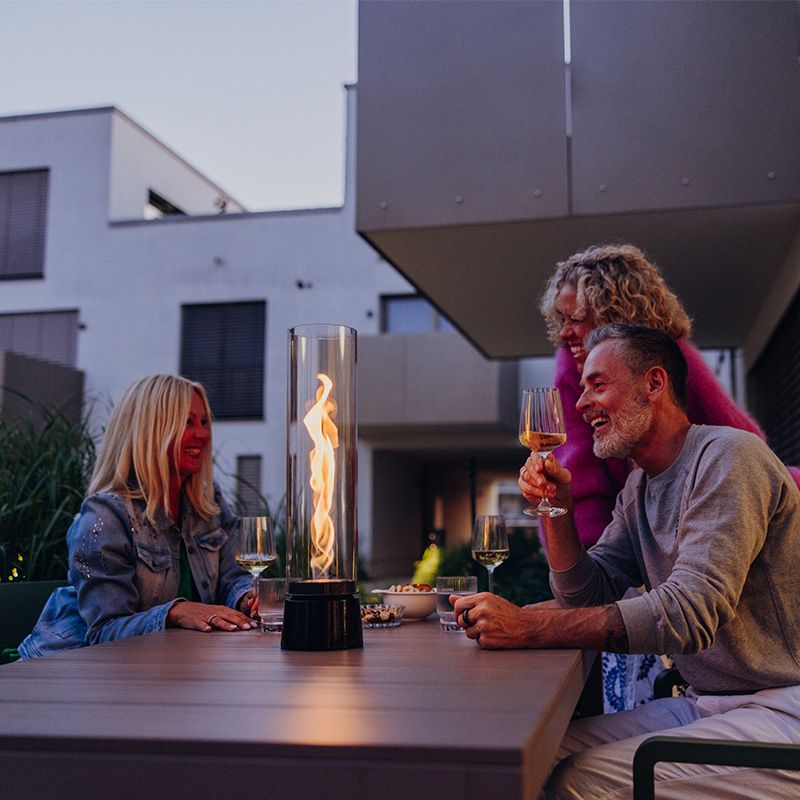
Bioethanol is a renewable liquid fuel made from plant sugars. Burners such as the Hofats SPIN air range feed vapour into a controlled flame inside a glass cylinder. The result is a clean, almost smokeless burn with a distinctive flame pattern suited to tables, balconies, and compact outdoor areas.
Heat and Ambience
Bioethanol burners are ambience-first devices. They produce gentle warmth close to the unit, but they are not designed as space heaters.
Think of it as candlelight amplified — visually striking, softly warming, and ideal for atmosphere rather than heating large areas.
Fuel, Runtime and Practicalities
- Use high-quality bioethanol fuel as specified by the manufacturer
- A typical 1 litre fill on tabletop units can last approximately 60 to 90 minutes (varies by model and flame setting)
- Minimal residue and no ash
- Allow the unit to cool fully before handling or covering
Ventilation and Indoor Notes
Bioethanol burners do not require a flue because combustion is clean when operated correctly. However, they do consume oxygen and produce carbon dioxide and water vapour.
If used indoors:
- Ensure adequate ventilation
- Follow manufacturer guidance carefully
- Expect minimal odour during lighting or extinguishing, similar to a candle
Do Smokeless Fire Pits Really Work?
Yes — within their design limits.
Secondary combustion significantly reduces visible smoke once the fire reaches operating temperature and dry fuel is used. You may still notice smoke during:
- Startup
- Burning damp logs
- Adding fresh fuel that temporarily cools the chamber
Compared to traditional open bowls, the difference is clear: less eye irritation, fewer smoky gusts, and cleaner clothing.
Drawbacks to Consider
- Startup phase: Some smoke is expected until the system is hot
- Fuel sensitivity: Damp or oversized logs reduce efficiency
- Localised heat: Warmth is focused rather than wide-area
- Sound: Airflow can produce a subtle whoosh in some designs
Bioethanol FAQs in Brief
Are bioethanol burners worth it?
Yes — particularly for those seeking instant, clean ambience with minimal setup.
Do bioethanol fires need a flue?
No flue is required, but ventilation is important when used indoors.
Do they smell?
High-quality fuel burns with minimal odour. A faint scent may be noticeable at ignition or extinguishing.
Do they give off carbon monoxide?
Clean combustion produces primarily carbon dioxide and water vapour. Proper ventilation and correct fuel use are essential.
How long will 1 litre last?
Typically around 60 to 90 minutes on tabletop models, depending on settings and design.
Safety Essentials for Spring Entertaining
Whether using wood or bioethanol:
- Place on a stable, level base
- Use a stand and heat shield on decking or grass
- Maintain safe clearances from structures and overhangs
- Use spark screens for wood fire pits if embers are a concern
- Extinguish with a snuffer lid or designated control (never blow out flames)
- Wear aramid gloves when handling hot components
- Allow full cooling before moving or covering
- Store fuel safely, upright, and away from ignition sources
- Follow local bylaws and tenancy rules
Accessories That Make the Difference
The right accessories improve both safety and usability.
For wood fire pits:
- Stand or base
- Heat shield
- Spark screen
- Fitted cover
- Snuffer lid
For Hofats SPIN air:
- Snuffer
- Eco-Ring
- Refill cup
- Fitted cover
- Bioethanol fuel
- Aramid gloves
Choosing Between Low-Smoke Wood and Bioethanol
Choose low-smoke wood fire pits if:
- You enjoy the ritual of real wood fires
- You want stronger radiant heat
- You have outdoor space for safe clearances
- You prefer a sociable, central fire experience
Choose bioethanol burners if:
- You want clean, smoke-free ambience
- You need a solution for tables or balconies
- You prefer minimal setup and maintenance
- You value a design-led aesthetic with instant ignition
Many households combine both: a wood fire pit for longer gatherings and a tabletop burner for refined, close-up ambience.
Quick FAQ Recap
- Do smokeless fire pits really work? Yes, with dry fuel and proper heat they significantly reduce smoke.
- What are the drawbacks? Startup smoke, fuel sensitivity, and localised heat.
- Are bioethanol burners worth it? Yes for clean, simple, atmospheric use.
- Do they need a flue? No, but ventilation is required indoors.
- Do they smell? Minimal with quality fuel.
- Do they emit carbon monoxide? Proper use and ventilation keep this negligible.
- How long does 1 litre last? Typically 60–90 minutes depending on the unit.
- What accessories help? Stands, shields, screens, covers, snuffers, fuel, and gloves.
Summary and Next Step
The right choice depends on how you want to use your outdoor space. Low-smoke wood fire pits deliver authentic flames with reduced smoke, while bioethanol burners provide a clean, convenient, and design-focused alternative for smaller or more controlled settings.
With the correct setup, accessories, and fuel, both options offer reliable, enjoyable evenings outdoors.
Explore a curated selection of outdoor fire pits, Hofats SPIN air models, and essential accessories at Garden Chefs, or get in touch for guidance on choosing the right configuration for your space
