

 ESTIMATED DELIVERY DATE: 1-2 working days

Blog
Bioethanol Burners for Outdoor Ambience: Safety and Costs
Oct
Bioethanol burners for outdoor ambience: safety, heat and running costs explained
Looking for real flame atmosphere without smoke or fuss on a patio or balcony? Bioethanol burners offer a clean, modern way to add glow to evenings, from quiet suppers to festive gatherings.
This guide explains what bioethanol is, how to light and extinguish safely, sensible ventilation for outdoor use, typical burn times, heat expectations, smell myths, CO considerations, and how bioethanol compares with wood or gas. You will also find practical placement tips for tabletops and the key accessories that keep everything simple.
What bioethanol is and why people choose it
Bioethanol is a liquid fuel produced from plant-derived sources. It burns with a visible flame and, when used correctly, produces no soot or ash and very little odour. For patios and balconies where smoke and embers are unwelcome, it is an easy way to get ambience without storing logs or connecting plumbed gas.
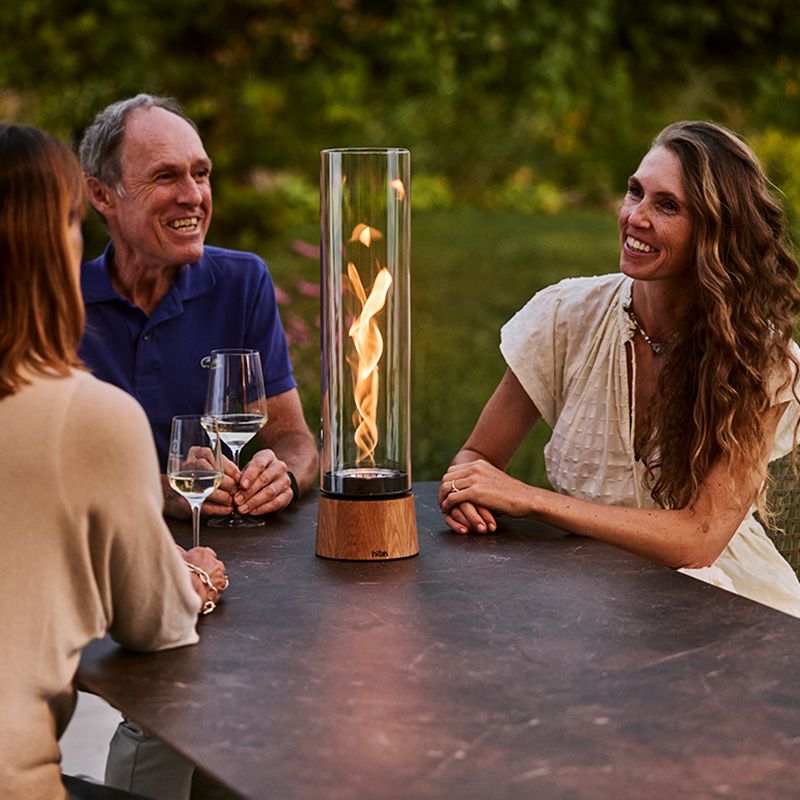
Design-led tabletop models, such as the Hofats SPIN family, create a striking, contained flame in borosilicate glass, ideal for small spaces or as a centrepiece on a dining table.
Lighting, refuelling and snuffing the flame
Safe use starts with a cool burner and the right fuel.
- Only use high-quality liquid bioethanol intended for burners.
- Fill the reservoir carefully when the unit is completely cool. Wipe any spills before lighting.
- Light with a long-reach lighter to keep hands clear.
- To turn off, place the supplied snuffer lid or shut-off cap fully over the flame to cut oxygen. Do not blow it out.
- Let the burner cool fully before refuelling or moving.
We stock helpful accessories like snuffer lids, refill cups, fitted covers and bioethanol refills to keep setup and tidy-up quick and safe.
Outdoor ventilation and where to place a burner
Outdoors, natural ventilation is usually sufficient, but good placement still matters:
- Choose a stable, level, non-flammable surface.
- Keep clear space above the flame and avoid overhanging plants, parasols or fabrics.
- In breezy conditions, pick a sheltered spot to prevent flicker and fuel waste.
- For tabletops, use a protective base or heatproof mat to shield wood, composite or painted surfaces.
- Keep children and pets at a sensible distance and never leave a live flame unattended.
If using under a canopy, ensure it is open-sided with generous airflow. Do not use bioethanol fires in enclosed, unventilated spaces.
Heat output: what to expect outside
Bioethanol is best for ambience first and gentle warmth second. On open patios, expect a cosy glow and a small warmth halo rather than deep heating. Larger burners produce more radiant heat, but wind and open space will disperse warmth.
If steady, adjustable heat is your priority, a gas fire table offers stronger, controllable output; if theatre and crackle are essential, a wood fire pit delivers that classic feel with more hands-on tending.
Burn times and running costs
How long does 1 litre of bioethanol last? It varies by burner size, wick design, flame setting and wind. As a guide, typical outdoor tabletop burners run about 60 to 120 minutes per 0.5 litre, or roughly 2 to 4 hours per litre. Gusty conditions shorten that window.
Running cost depends on your local fuel price and how you use the burner. Because most sessions are a couple of hours, many owners find a few litres cover several evenings of low-maintenance ambience.
Smell, smoke and CO facts
Do bioethanol fires smell? With quality fuel and correct use, there is little to no noticeable odour. You may catch a faint note at ignition or extinguishing, but there is no wood smoke haze and no ash.
Do bioethanol fires give off carbon monoxide? Any flame can produce small amounts of carbon monoxide if oxygen is limited. Outdoors with free airflow and correct operation, this is typically not an issue. Use common sense: keep ventilation open, never enclose the flame, and follow the manufacturer’s guidance.
For indoor use, follow the product’s instructions on room size and ventilation and consider a carbon monoxide alarm as a general household safety measure.
Do bioethanol fires need a flue? No flue is required because there is no soot or ash. Outdoors, natural ventilation is the goal.
Pros and cons vs wood or gas
Bioethanol pros
- Real flame with minimal smoke and no ash
- No plumbed gas or cylinder changeovers
- Quick to set up and tidy away, great for balconies and tabletops
- Design-led look, clean glass and metal finishes
Bioethanol cons
- Lower heat than gas or a well-fed wood pit
- Fuel costs vary and wind can shorten burn time
- Must cool fully before refuelling
Wood fire pits bring theatre, crackle and higher radiant heat, but create smoke and ash and need more tending.
Gas fire tables deliver steady, adjustable warmth and convenience, but involve cylinders or a gas supply and a larger footprint.
Tabletops and protective bases
For dining tables, coffee tables and composite or timber surfaces, add a protective base that is stable, heat resistant and sized beyond the burner footprint.
Keep glassware, napkins and foliage out of the heat plume. Allow full cool-down before covering or moving. We also offer fitted covers that protect the glass and body between uses.
Accessories we recommend
A simple, safe setup usually includes:
- Bioethanol refills, matched to your burner’s specification
- A snuffer lid or shut-off cap
- A protective base for tabletops
- A fitted cover for storage and off-season care
- Heat-resistant gloves for moving parts once cold
Are bioethanol burners worth it?
If you value clean ambience, simple setup and a compact footprint, yes, they are often worth it.
For open-air warmth in winter or large seating areas, step up to gas for heat or choose wood for theatre if smoke is acceptable.
Many customers pair options: a gas or wood centrepiece for warmth and one or two bioethanol tabletop flames for layered light.
FAQs
- Are bioethanol burners worth it? Often, for smoke-free ambience on patios and balconies with minimal maintenance. Choose gas or wood if maximum heat is the priority.
- How long does 1 litre of bioethanol last? Typically around 2 to 4 hours, depending on burner size, flame setting and wind.
- Do bioethanol fires give off carbon monoxide? Any flame can produce some CO. Outdoors with good airflow and proper use, risk is typically reduced. Follow the manufacturer’s guidance and keep ventilation open.
- Do bioethanol fires smell? Quality fuel used correctly has little to no noticeable odour, aside from a brief note at ignition or snuffing.
- Do bioethanol fires need a flue? No, there is no soot or ash, so no flue is required.
- Do you need ventilation for bioethanol fires? Outdoors, yes, keep natural airflow. Do not use in enclosed, unventilated spaces.
- How do you turn off a bioethanol fire? Use the supplied snuffer lid or shut-off cap to cover the flame fully and starve it of oxygen.
- Are bioethanol fires legal in the UK? Portable outdoor bioethanol burners intended for decorative use are widely sold and used. Follow local regulations, product instructions and common-sense safety.
Related designs to explore
- For striking tabletop flames with clean-burning fuel, see our bioethanol range including the Hofats SPIN family: take a look at our bio ethanol fireplace selection.
- Prefer a single, statement gas unit with stronger heat control? Explore a modern gas fire table pit for consistent warmth.
- If wood-fired theatre appeals, browse our contemporary outdoor fire pits and bowls.
Delivery, care and our guarantee
We offer tracked UK delivery. Timings can vary by product and location, so check the product page or your basket for exact dates.
Our satisfaction promise is simple, love it or get a 100% refund, see our Refund Policy for full terms.
Need advice or a stock check? Call 01383 669190 (Option 4).
Summary
Bioethanol burners deliver real-flame ambience without smoke, with easy lighting and snuffing via a simple lid, no flue, and straightforward outdoor ventilation.
Expect 2 to 4 hours per litre in typical conditions and gentle warmth best suited to close seating. Add a protective base for tabletops, use quality fuel, and let the burner cool before refuelling.
If you want stronger heat, consider gas or wood; for clean, design-led glow, bioethanol is hard to beat.
